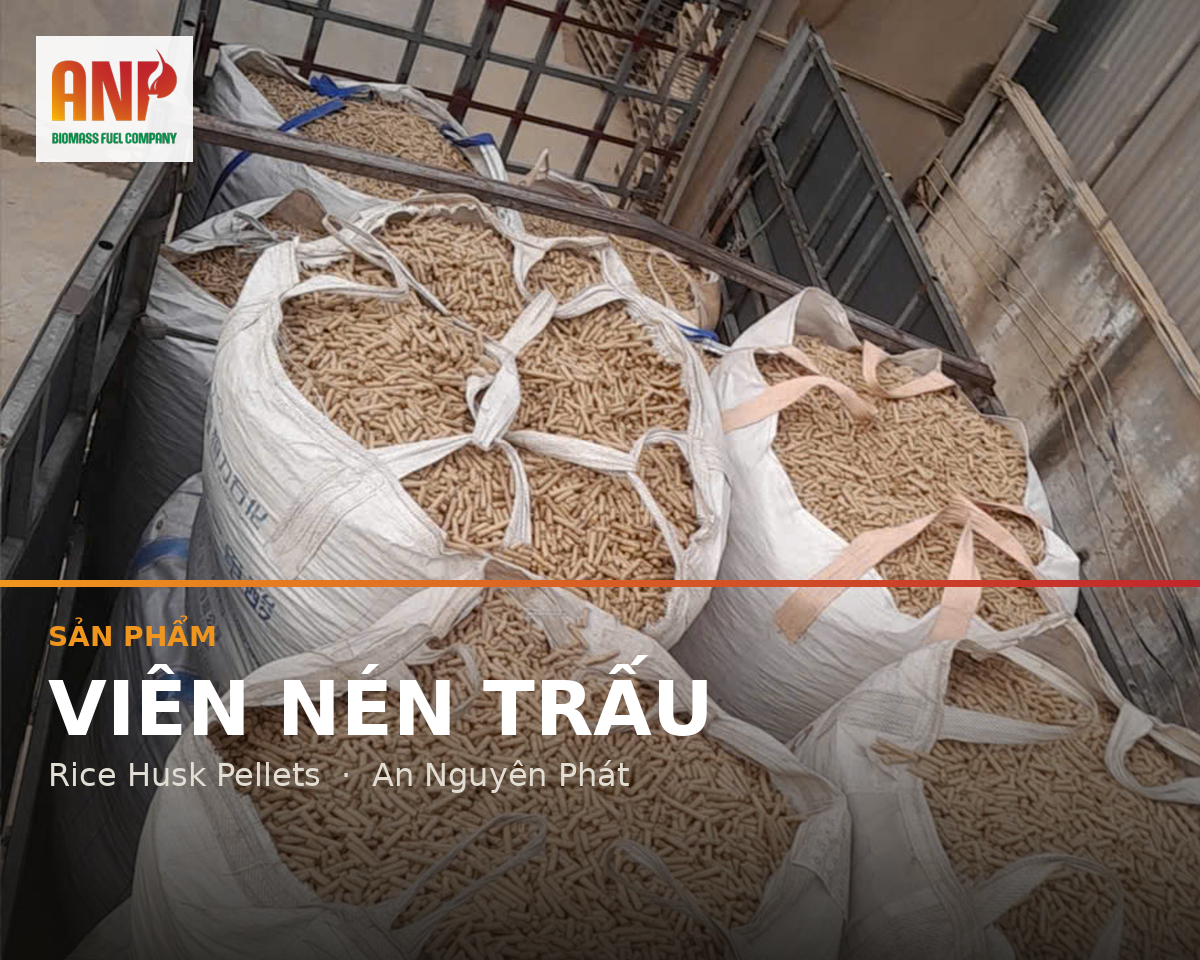
Rice Husk Pellets for Textile Dyeing and Garment Factories in Tay Ninh, Nhon Trach, Dong Nai, and Binh Duong VSIP
Rice husk pellets for textile dyeing and garment factories are now widely supplied across Southeast Vietnam, concentrated in Tay Ninh IZ, Nhon Trach IZ (Dong Nai), and Binh Duong VSIP. This industry group is under the strongest fuel-conversion pressure driven by requirements from parent companies and international brands.
Which Industrial Zones Currently Receive Rice Husk Pellet Supply?
| Area | Primary Industry | Characteristics |
| Tay Ninh IZ | Dệt nhuộm, dệt may | Concentration of export-processing factories |
| Nhon Trach IZ, Dong Nai | Textile dyeing, FMCG | Close to raw material sources, convenient transport |
| Binh Duong VSIP | FMCG | Many large-scale FDI factories |
| Long Thanh IZ, Dong Nai | Textile dyeing, FMCG | Expanding industrial zone, rapidly growing demand |
What these factories have in common is that they all operate industrial boilers to meet production heat demand — fabric dyeing, drying, sterilization, or process-line heating — and are all in the process of converting from fossil fuels (coal, FO oil) to biomass fuel, following a roadmap set by their parent company or partners.
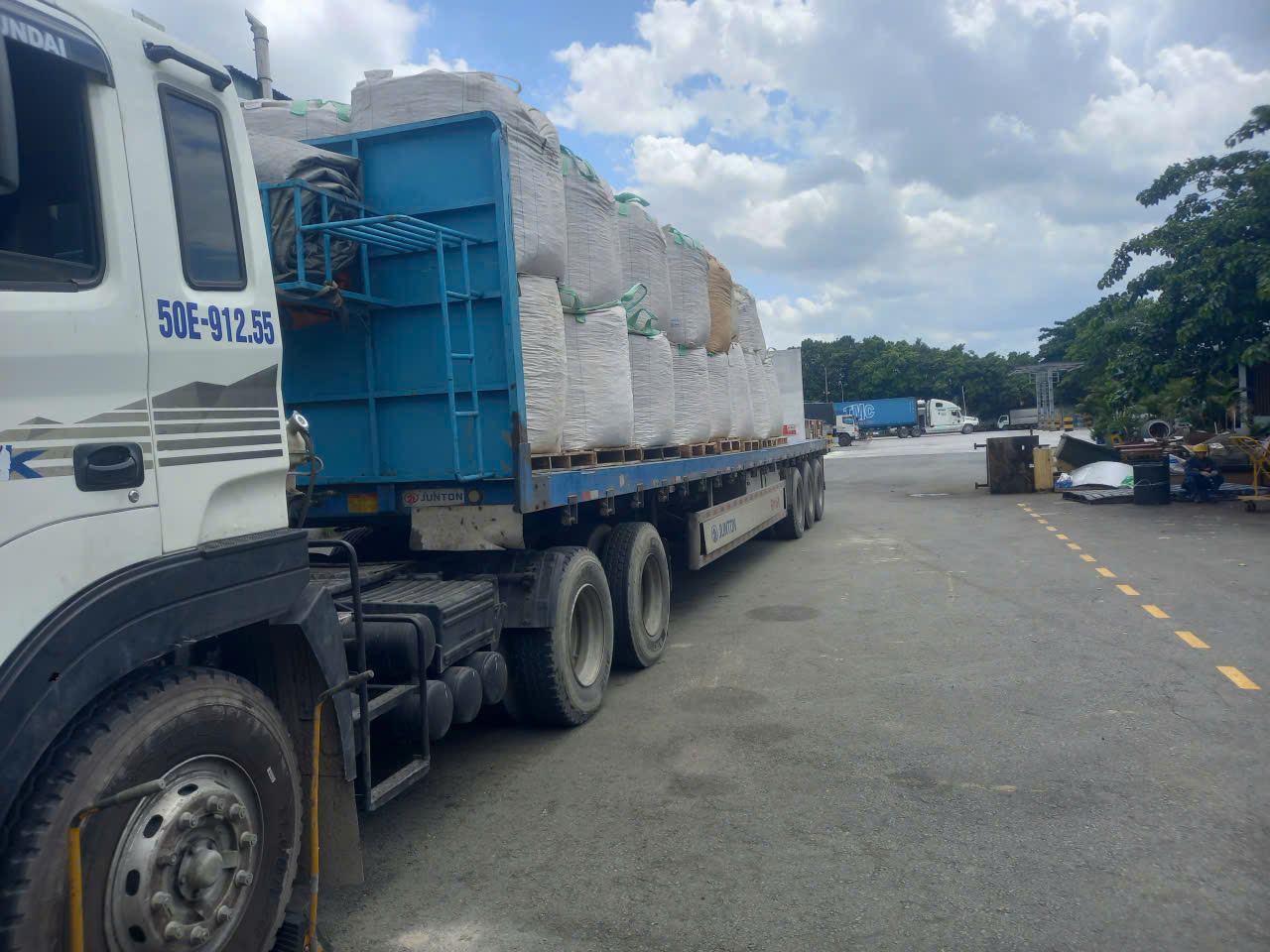
ANP currently supplies rice husk pellets directly to all four of the above areas, using 20-ton trucks or 30-ton containers, with 24/7 delivery.Why Are Dyeing and Garment Factories in These Industrial Zones Switching to Rice Husk Pellets?
Conversion Requirements from Parent Companies and Major Partners
Most textile dyeing and garment factories in Tay Ninh IZ, Nhon Trach, and Binh Duong VSIP are contract manufacturers for international brands such as Adidas, Nike, and Decathlon. These brands are tightening carbon-emission reduction requirements across the supply chain (typically part of their Scope 3 commitments), forcing factories to convert boiler fuel from coal to rice husk pellets to retain orders — a requirement usually built into the annual supplier scorecard.
An Inevitable Green Transition Trend
Dyeing and garment factories that are slow to convert risk losing orders to competitors that already meet environmental standards — especially FDI factories in Tay Ninh, Dong Nai, and Binh Duong, which depend directly on long-term orders from major brands.
Why Do Dyeing and Garment Factories Choose Rice Husk Pellets Over Other Biomass Fuels?
Abundant, Stable Raw Material Supply
Rice husk is a by-product of Vietnam’s rice milling industry — Vietnam is the world’s second-largest rice exporter. Supply is always available, allowing factories in Tay Ninh, Nhon Trach, and VSIP to plan their long-term fuel needs proactively. https://vietfood.org.vn/xuat-khau-gao-nua-dau-nam-2026-giu-nhip-tang-truong/
Stable Calorific Value
Rice husk pellets deliver a stable calorific value of around 3,800 kcal/kg, ensuring even combustion performance — critical for fabric-dyeing lines that require a constant temperature.
No Waste Generated — Ash Can Be Reused
Rice husk pellet ash (mainly silica) can be used as fertilizer, helping dyeing factories reduce waste-disposal costs compared with coal.
Emissions Meet Standards
Sulfur and nitrogen content is significantly lower than coal, meeting both domestic environmental regulations and ESG requirements from international partners.
Compared with Other Biomass Types
Compared with wood pellets or chipped wood, rice husk pellets have more stable pricing thanks to year-round domestic supply, without pressure from imports or forest-harvesting restrictions.
Which Boiler Types Are Rice Husk Pellets Suitable For at Dyeing Factories?
Suitable for most common industrial boilers used at dyeing and garment factories in Tay Ninh, Nhon Trach, and VSIP — including chain-grate boilers and fluidized-bed boilers.
What Should Factories in Tay Ninh, Nhon Trach, and VSIP Consider When Converting?
Frequently Asked Questions
Where can dyeing factories in Tay Ninh IZ buy rice husk pellets?
An Nguyen Phat supplies directly to Tay Ninh IZ — call +84 973 116 191 for a quote.
Do you deliver rice husk pellets to Nhon Trach IZ, Dong Nai?
Yes, ANP delivers regularly to Nhon Trach and Long Thanh IZ, Dong Nai, using 20-ton trucks or 30-ton containers.
Are there factories in Binh Duong VSIP currently using rice husk pellets?
Yes, many garment and F&B factories in Binh Duong VSIP have already switched to rice husk pellets in response to requirements from international brands.
Why must dyeing and garment factories switch to rice husk pellets?
Because of carbon-emission reduction requirements from parent companies and brands like Adidas, Nike, and Decathlon — a condition for continuing to receive orders.
Does using rice husk pellets create waste?
After combustion, only ash remains, which can be reused as fertilizer — no complex waste like coal slag is generated.
How can a factory convert to rice husk pellets?
Contact An Nguyen Phat at +84 973 116 191 or annguyenphatbiomass@gmail.com for consultation and a quote.
Consultation on Switching to Rice Husk Pellets