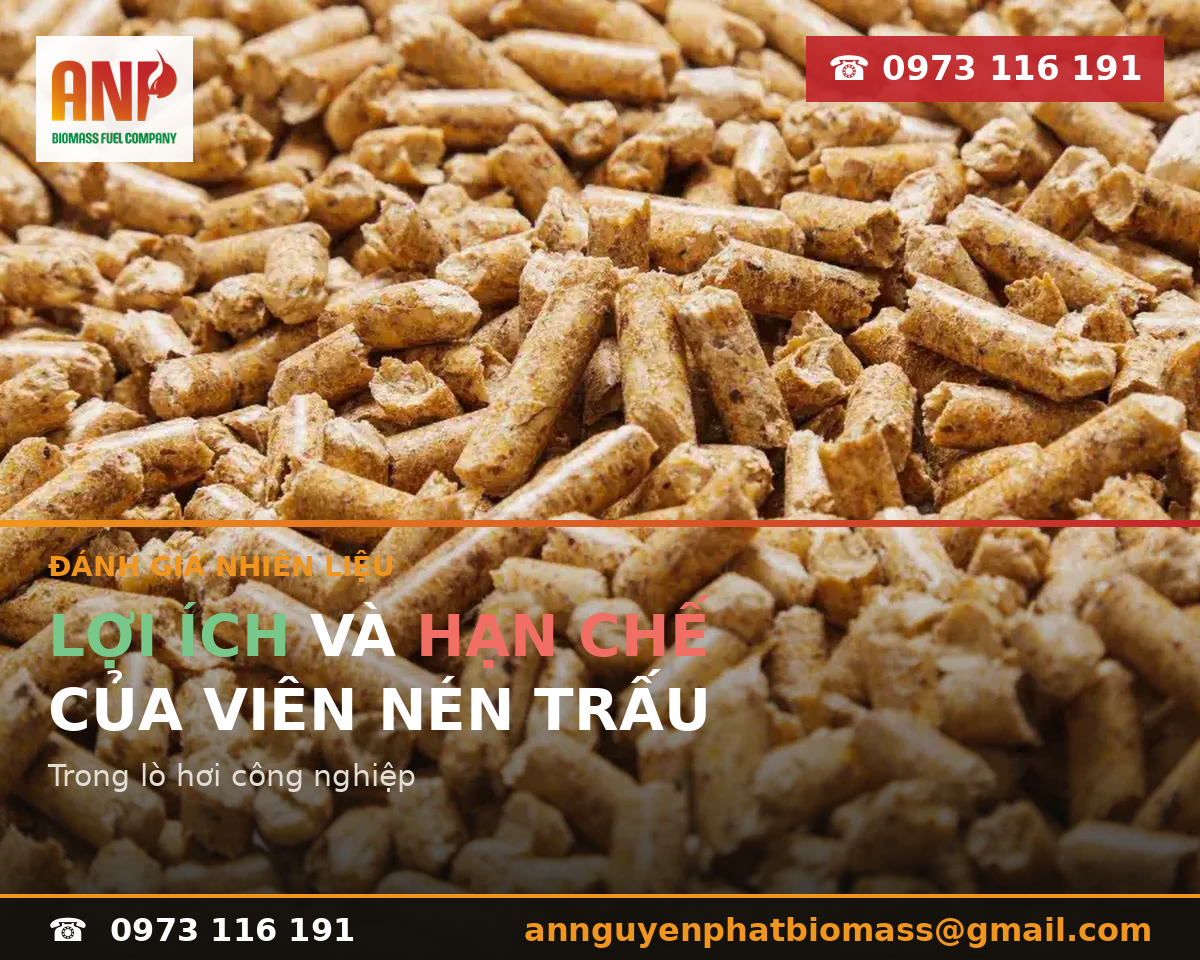
Fuel Evaluation
Benefits and Limitations of Rice Husk Pellets in Industrial Boilers
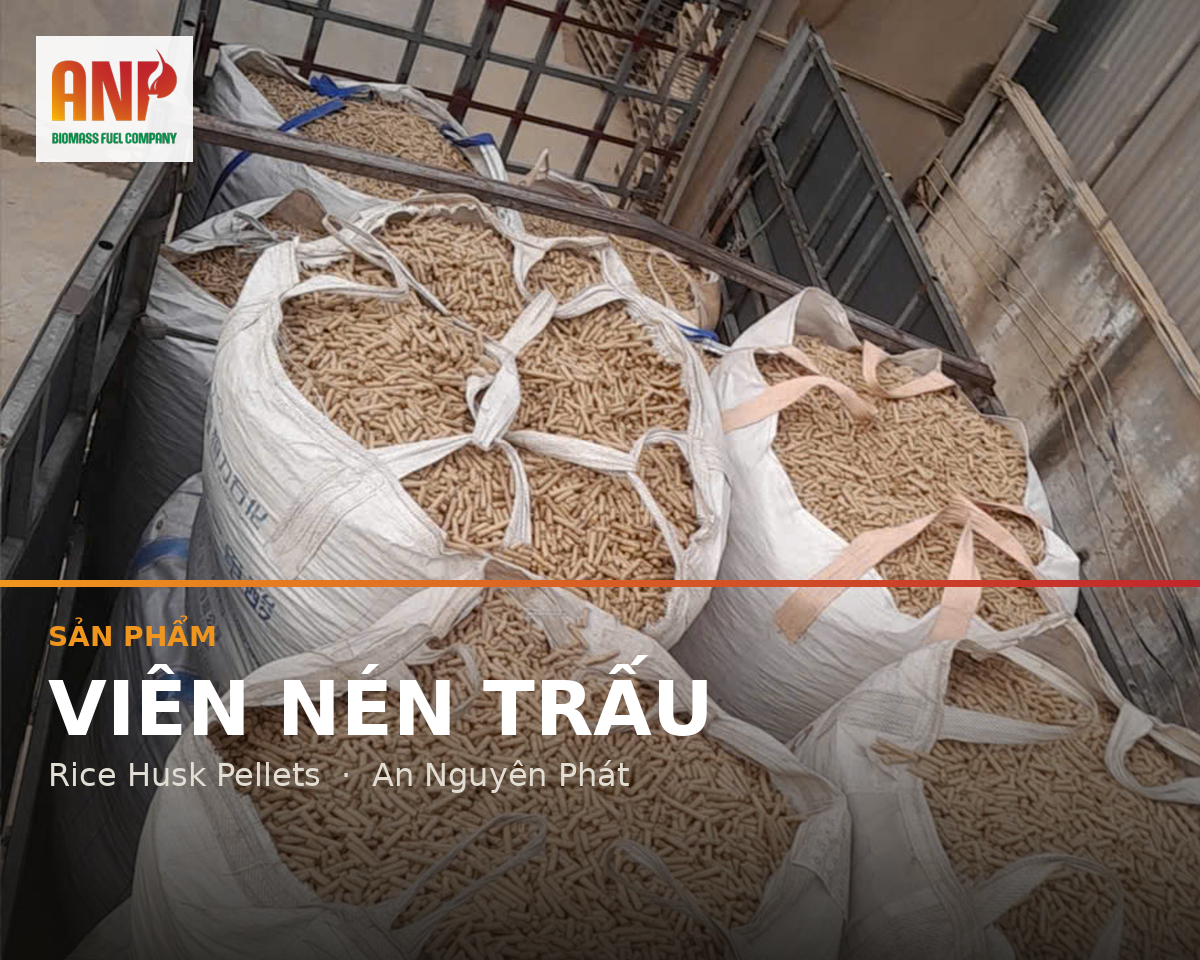
The benefits and limitations of rice husk pellets should be evaluated by each factory based on its specific steam-heat application — not every factory is equally well suited. Rice husk pellets offer advantages in meeting emission standards, stable calorific value, and reasonable cost, but also have limitations in ash content and storage requirements that factories should consider before converting. An Nguyen Phat has compiled the full picture below to give factories a basis for evaluation.
How Does Steam-Heat Application Affect the Choice of Rice Husk Pellets?
Each industry uses steam heat differently, so the suitability of rice husk pellets also varies:- Textile dyeing factories: use steam heat for fabric dyeing, drying, and setting — requiring continuous, stable temperatures. Rice husk pellets, with their even calorific value, meet this requirement well.
- Food and beverage (F&B) processing plants: use steam heat for sterilization, cooking, and drying — requiring a clean heat source with minimal impurities.
- FMCG factories: use steam heat across various production stages, generally prioritizing stable fuel costs throughout the seasons.
Therefore, before converting, factories should clearly identify their steam-heat application to correctly assess suitability.
What Are the Benefits of Rice Husk Pellets in Industrial Boilers?
✓ Reduced Carbon Emissions
Because it is produced from an agricultural by-product (rice husk) rather than extracted fossil fuel, rice husk pellet fuel is considered renewable, helping factories significantly reduce carbon emissions compared with coal — supporting the supply-chain emission-reduction goals required by many international brands.
✓ Emissions Meet Standards
Sulfur and nitrogen content is significantly lower than coal, helping factories meet domestic emission standards and ESG requirements from international partners.
✓ Stable Calorific Value
Reaching around 3,800 kcal/kg, ensuring even combustion performance — suitable for lines that require stable temperatures, such as fabric dyeing or food sterilization.
✓ Competitive Pricing
Thanks to the abundant rice husk supply in Vietnam (the world’s second-largest rice exporter), rice husk pellets offer more stable costs than some biomass fuels that must be imported.
✓ Clean Fuel
Does not generate hard-to-manage waste — the ash after combustion can be reused as fertilizer, reducing waste-disposal costs for factories.
What Are the Limitations of Rice Husk Pellets in Industrial Boilers?
✕ Higher Ash Content Than Other Fuels
Rice husk pellets have an ash content of around 15–18%, significantly higher than wood pellets (usually below 3%).
Factories need to plan for more frequent boiler cleaning cycles and have a plan for handling or reusing the resulting ash.
✕ Lower Energy Density Than Fossil Fuels
Compared with coal, rice husk pellets require a greater volume to produce the same amount of heat, affecting transportation costs and storage space at the factory.
✕ Prices Fluctuate with the Crop Season
Because it depends on agricultural raw material, the price of rice husk pellets can fluctuate with the rice growing season and rice export conditions, requiring factories to plan long-term supply to avoid price risk.
Quick Comparison of Benefits and Limitations
| Criteria | Benefits | Limitations |
|---|---|---|
| Emissions | Meets standards, lower than coal | — |
| Calorific Value | Stable at ~3,800 kcal/kg | Lower energy density than coal |
| Cost | Competitive, domestic supply | Fluctuates with the crop season |
| Ash / Waste | Ash can be reused as fertilizer | Higher ash content than wood pellets |
| Storage | Easier to transport than loose husk | Requires dry storage, protected from moisture |
Are Rice Husk Pellets Suitable for Every Factory?
Not entirely — suitability depends on the steam-heat application and the actual conditions of each factory. Dyeing and F&B factories with continuous, stable heat demand are generally well suited. Factories with limited storage space or a need for very high energy density should consider further, or combine rice husk pellets with other biomass fuels (wood pellets, cashew shell) to optimize cost and performance.An Nguyen Phat currently supplies all four of these fuel types, helping factories flexibly choose based on their actual needs.
Frequently Asked Questions
What standard do An Nguyen Phat’s rice husk pellets meet?
An Nguyen Phat’s rice husk pellets meet calorific value, ash content, and emission standards required by FDI factories. See details in the article “What Are Rice Husk Pellets? Technical Standards for Export.”
What is the biggest benefit of rice husk pellets?
Emissions that meet standards and a stable calorific value, helping factories meet environmental requirements while maintaining production performance.
What is the biggest limitation of rice husk pellets?
A higher ash content than wood pellets, requiring more frequent boiler cleaning.
Which factories are best suited to rice husk pellets?
Factories that need continuous, stable heat, such as dyeing and F&B plants — especially FDI factories that need to meet international emission standards.
How can factories reduce the impact of the higher ash content of rice husk pellets?
Schedule regular boiler cleaning and make use of the post-combustion ash as fertilizer, helping reduce waste-disposal costs.