Practical Applications
Rice husk pellet fuel dyeing and textile factories: Xining, Renze, Tongnai, Pingyang VSIP Industrial Park
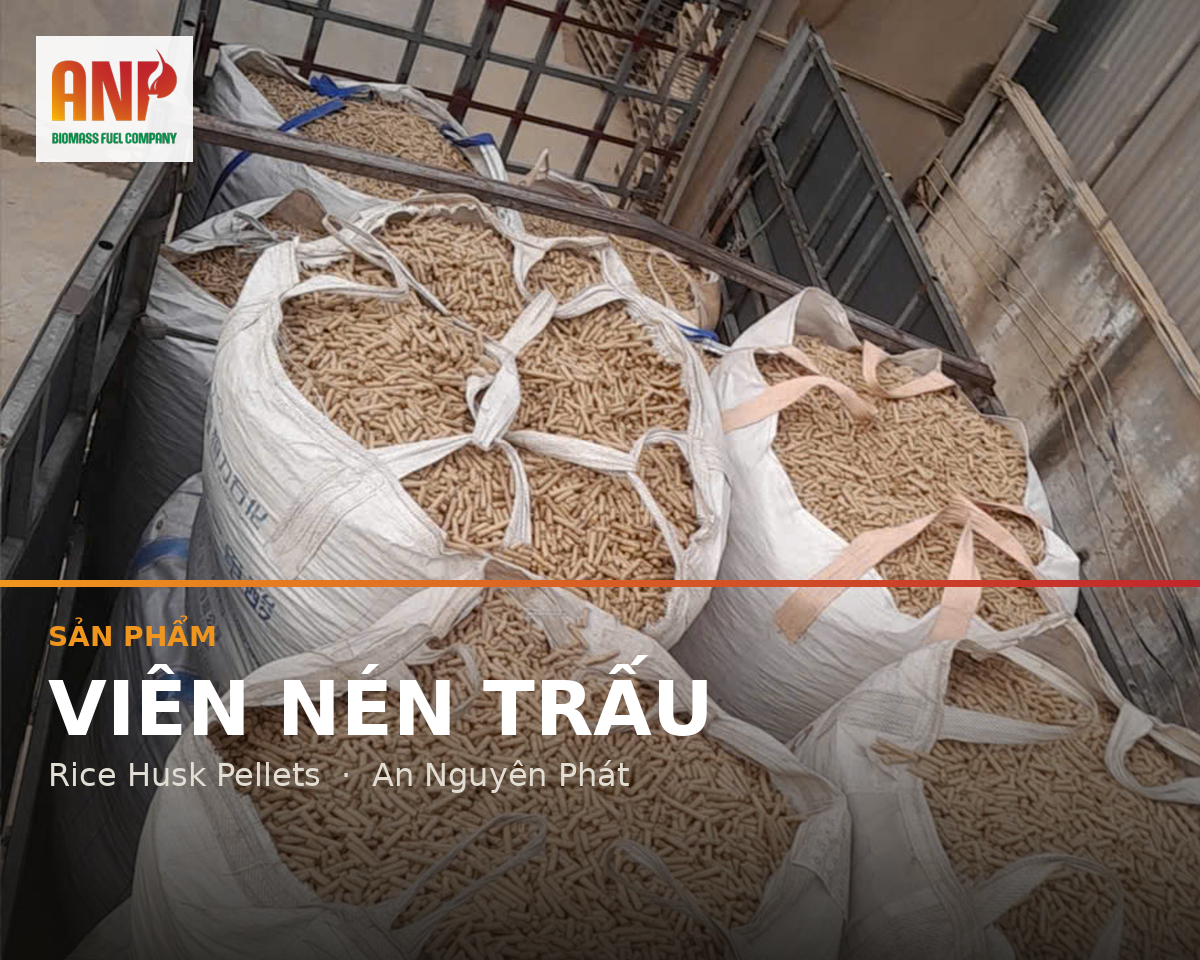
Rice husk pellet fuel for dyeing, textile and garment factories is now widely supplied to southeastern Vietnam, mainly concentrated in Tay Ninh Industrial Park, Nhan Chak Industrial Park (Dong Nai Province), and Binh Duong VSIP. This industry group is facing the greatest pressure to switch fuels from its parent companies and international brands.
Which industrial parks does the rice husk pellet fuel dyeing and textile factory currently supply?
| region | Main industries | Features |
|---|---|---|
| Xining Industrial Park | Printing and dyeing, textiles and clothing | Concentrated export processing plants |
| Nhon Chak Industrial Complex (Dong Nai Province) | Printing and dyeing, fast-moving consumer goods (FMCG) | Located near raw material production areas, with convenient transportation. |
| Pingyang VSIP | Fast-moving consumer goods (FMCG) | Numerous large-scale FDI foreign-invested factories |
| Long Thanh Industrial Park (Dong Nai Province) | Printing and dyeing, fast-moving consumer goods (FMCG) | Industrial park expansion drives rapid demand growth |
Why are these industrial parks’ dyeing, printing, and textile/garment factories switching to rice husk pellet fuel?
01
Conversion requirements from parent company and major partners
Most of the dyeing, textile, and garment factories in Xining Industrial Park, Renze Industrial Park, and Pingyang VSIP are OEM manufacturers for international brands such as Adidas, Nike, and Decathlon. These brands are tightening carbon reduction requirements on their supply chains (usually part of Scope 3 commitments), forcing factories to switch boiler fuel from coal to rice husk pellets to retain orders—a requirement that is typically included in the annual supplier scorecard assessment criteria.
02
Green transformation is an inevitable trend.
Dyeing, textile and garment factories that are slow to adapt face the risk of losing orders to competitors that already meet environmental standards—this is especially true for FDI foreign-invested factories in places like Xining, Dongnai, and Pingyang that rely on long-term orders from major brands.
Why do dyeing, printing, textile, and garment factories choose rice husk pellets as fuel instead of other biomass fuels?
Raw material sources are sufficient and stable
Rice husks are a byproduct of Vietnam’s rice milling industry—Vietnam is the world’s second-largest rice exporter. A consistently ample supply of raw materials allows the Tay Ninh, Nhan Chak, and VSIP plants to proactively plan for long-term fuel needs.
Stable calorific value
Rice husk pellet fuel has a stable calorific value of about 3,800 kcal/kg, which ensures uniform combustion efficiency—especially important for fabric dyeing production lines that require constant temperatures.
No waste is generated – ash can be recycled.
The ash from rice husk pellet fuel (mainly composed of silicon dioxide) can be used as fertilizer, which can help printing and dyeing factories reduce waste disposal costs compared to coal.
Emissions meet standards
The sulfur and nitrogen content is significantly lower than that of coal, which not only complies with domestic environmental regulations but also meets the ESG requirements of international partners.
Compared with other biomass fuels
Compared to wood pellets or wood chips, rice husk pellet fuel has a more stable price due to ample domestic supply throughout the year, and is not affected by import pressures or logging restrictions.
Which type of boiler is suitable for use with rice husk pellet fuel in a dyeing and printing factory?
Suitable for most common industrial boilers currently used in dyeing, textile and garment factories in Xining, Renze, and VSIP areas—including chain grate boilers and fluidized bed boilers.What precautions should be taken when converting factories in Xining, Renze, and VSIP?
- Check the compatibility of the feeding system with the supplier’s existing particle sizes (12 mm or 8 mm).
- A Certificate of Analysis (COA) is required for each shipment to verify compliance with emission standards required by partners or the parent company.
- Assess storage space – Rice husk pellet fuel must be stored dry, as moisture will reduce its calorific value.
- Plan long-term supply through quarterly or annual contracts to avoid seasonal price fluctuations.
Frequently Asked Questions
Where can dyeing and printing factories in Xining Industrial Park purchase rice husk pellet fuel?
Anyuanfa supplies directly to Xining Industrial Park. Please call 0973 116 191 for a quote.
Is rice husk pellet fuel being delivered to the Nhon Chak Industrial Complex in Dong Nai province?
Yes, An Yuanfa regularly delivers goods to Ninh Trach and Long Thanh Industrial Park in Dong Nai province using 20-ton trucks or 30-ton containers.
Does VSIP in Binh Duong have any plants using rice husk pellet fuel?
Yes, several textile, garment, and food and beverage (F&B) factories in Binh Duong VSIP have switched to rice husk pellet fuel in accordance with the requirements of international brands.
Why must dyeing, printing, textile, and garment factories switch to rice husk pellet fuel?
The parent company and brands such as Adidas, Nike, and Decathlon require reduced carbon emissions—a condition for continuing to receive orders.
Does using rice husk pellet fuel generate waste?
After combustion, only ash remains, which can be recycled and used as fertilizer, unlike coal ash which produces complex waste.
How should factories switch to using rice husk pellet fuel?
Please call Anguyenphat Biomass at 0973 116 191 or email annguyenphatbiomass@gmail.com for consultation and quotes.
Rice husk pellet fuel conversion consulting
Telephone: 0973 116 191